


Former President Donald Trump’s military deceptions in modern American history, using strategic misdirection to protect U.S. national security interests while dealing a devastating blow to Iran’s nuclear ambitions. This exclusive Stucci Media investigation reveals how the Trump administration’s brilliant tactical operation unfolded and why it represents a masterclass in American military strength.

Inside Operation Midnight Hammer: America’s Bold Strike Against Nuclear Terrorism
When Donald Trump announced a two-week grace period before taking action against Iran in June 2025, many critics mocked him as indecisive. Liberal media outlets derided him with the nickname “TACO” (Trump Always Chickens Out), suggesting he lacked the resolve to confront Iran’s growing nuclear threat.
What these critics failed to understand was that Trump was executing a carefully orchestrated military deception designed to catch Iran completely off-guard.
The deception consisted of three brilliant tactical elements:
- Public misdirection: Trump’s announced “two-week deadline” was deliberately misleading, designed to lull Iranian intelligence into a false sense of security
- Strategic bomber decoys: Several B-2 bombers flew westward from Missouri bases as decoys, triggering Iranian defensive preparations in the wrong direction
- Surprise attack vector: Seven additional B-2 bombers traveled eastward undetected, refueling multiple times before striking from an unexpected direction
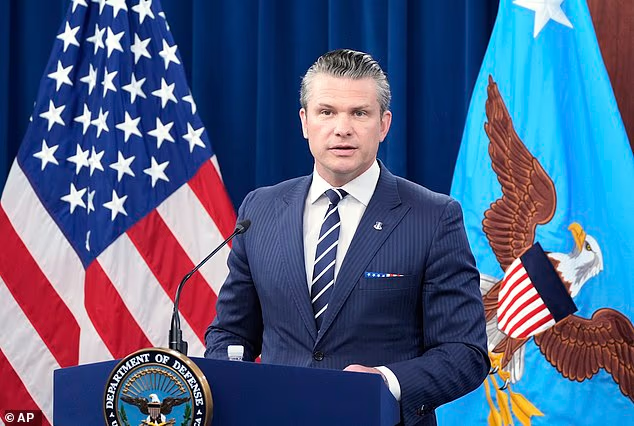
Defense Secretary Pete Hegseth later confirmed the stunning success of the mission: “Our B-2s went in and out and back without the world knowing at all.” This represents the largest coordinated B-2 bomber strike in American military history.
Trump’s Decisive Leadership Ended Years of Appeasement
The precision strikes targeted Iran’s Natanz and Fordow nuclear facilities using fourteen 30,000-pound “bunker buster” bombs designed specifically to penetrate hardened underground installations. Over 125 American aircraft participated in the operation, including bombers, fighters, and refueling tankers.
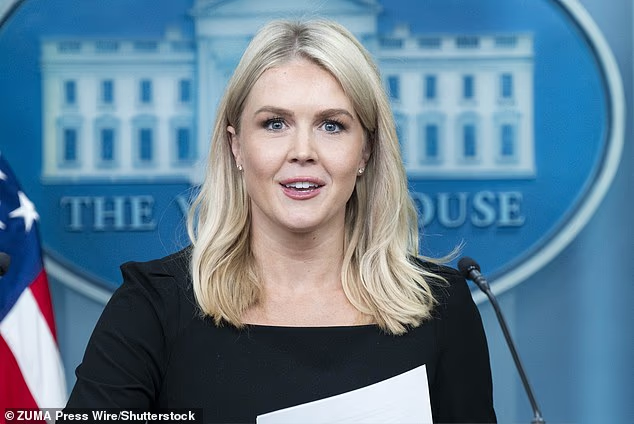
While previous administrations hesitated to confront Iran’s nuclear ambitions directly, President Trump demonstrated the courage and decisive leadership America needed. As White House Press Secretary Karoline Leavitt noted: “Many presidents have talked about this, but only President Trump had the guts to do it.”
The operation came after years of Iranian provocation and nuclear development that threatened both American interests and our key allies in the Middle East, particularly Israel. Intelligence reports confirm that Iran had been enriching uranium to 60 percent purity—just one technical step away from weapons-grade levels.
Presidential Hypocrisy Exposed: Democrats’ Stunning Reversal on War Powers Authority


Protecting American Lives While Neutralizing the Threat
Trump’s strategic approach accomplished multiple critical objectives:
- Prevented nuclear proliferation: Effectively degraded Iran’s nuclear enrichment capabilities
- Minimized civilian casualties: Strikes targeted nuclear facilities, not Iranian citizens
- Protected American troops: No U.S. casualties resulted from the operation
- Preserved strategic surprise: Comprehensive deception plan prevented Iranian defensive measures
- Demonstrated American resolve: Sent clear message that threats to U.S. security will be met with overwhelming force
Chairman of the Joint Chiefs of Staff Dan Caine described the mission as intended to “degrade the country’s nuclear programs,” while Secretary Hegseth characterized the operation as an “incredible and overwhelming success.”
Why Trump’s Approach Succeeded Where Others Failed
For decades, various administrations attempted to contain Iran’s nuclear ambitions through sanctions, diplomatic pressure, and multilateral agreements. These approaches consistently failed to halt Iran’s progress toward nuclear weapons capability.
Trump recognized that Iran responds only to demonstrations of strength and resolve. By combining strategic deception with overwhelming military power, his administration accomplished what many experts thought impossible: a successful strike against hardened nuclear facilities with minimal risk to American personnel.
The operation demonstrates several key principles of effective foreign policy:
- Strategic patience: Planning the operation methodically rather than rushing into conflict
- Tactical surprise: Using deception to maintain the element of surprise
- Overwhelming force: Deploying sufficient military assets to ensure mission success
- Clear objectives: Focusing specifically on nuclear facilities rather than broader targets
- Decisive leadership: Making difficult decisions when American security is threatened
Iran’s Desperate Attempts to Save Face
Following the devastating strikes, Iranian officials predictably attempted to downplay the damage, with local media claiming the impact was “quite superficial.” These face-saving measures contradict the assessment of U.S. military leaders and independent defense analysts who confirm the operation successfully degraded Iran’s nuclear capabilities.
Iran had reportedly received intelligence about potential strikes, leading them to attempt protective measures such as filling in tunnels at the underground Fordow facility. These last-minute efforts proved ineffective against America’s sophisticated bunker-buster munitions.
Prior to the strikes, Iran had threatened to activate sleeper cell terrorists on American soil if the U.S. intervened militarily. This desperate attempt at intimidation failed to deter President Trump from protecting American interests and regional stability.
The Historical Context: Iran’s Ongoing Threat
The conflict between Iran and the Western world has persisted for decades. Under Trump’s leadership, the United States demonstrated that it would no longer tolerate:
- Iran’s pursuit of nuclear weapons capability
- Threats against American citizens and interests
- Support for terrorist organizations throughout the Middle East
- Destabilizing activities in Syria, Iraq, Lebanon, and Yemen
While Iran has consistently claimed its nuclear program exists only for peaceful purposes, its enrichment of uranium to 60% purity—far beyond what’s needed for civilian applications—reveals the regime’s true intentions.
Looking Forward: A Stronger America
Trump’s decisive action against Iran’s nuclear program represents a return to the principle of “peace through strength” that has guided successful American foreign policy for generations. By demonstrating both the will and the capability to act decisively, the United States has regained credibility on the world stage.
As tensions remain high across the Middle East, the State Department has increased evacuation flights for American citizens in Israel and ordered the departure of non-essential personnel from the U.S. Embassy in Lebanon. The department has also issued travel warnings advising U.S. citizens worldwide to exercise increased caution.
Despite these precautions, the successful operation against Iran’s nuclear facilities has significantly reduced the long-term threat of nuclear proliferation in one of the world’s most volatile regions.
Subscribe to Stucci Media for for daily content.

Frequently Asked Questions About the Iran Strike
Q: Did the U.S. attack target Iranian civilians?
A: No. The operation specifically targeted nuclear facilities and deliberately avoided population centers. Defense Secretary Hegseth emphasized that the strikes “did not target Iranian troops or Iranian people.”
Q: How many American aircraft were involved in the operation?
A: Over 125 U.S. aircraft participated, including B-2 bombers, fighter jets, and refueling tankers.
Q: Did Iran attempt to intercept the American bombers?
A: According to Chairman of the Joint Chiefs Dan Caine, no Iranian planes were deployed to intercept the bombers due to the success of the deception operation.
Q: Was Israel involved in the U.S. strikes?
A: The operation was conducted independently by U.S. forces, though it followed Israel’s separate “Operation Rising Lion” which targeted military sites within Iran.
Q: Why didn’t previous administrations take similar action against Iran?
A: Previous administrations pursued diplomatic solutions that ultimately failed to halt Iran’s nuclear program. Trump’s administration demonstrated the resolve to use military force when necessary to protect American security interests.
The Bottom Line: American Security Strengthened
President Trump’s strategic deception and decisive action against Iran’s nuclear program represent a masterclass in protecting American interests while minimizing risk. By combining sophisticated military planning with bold leadership, the administration has significantly reduced one of the most dangerous threats facing the United States and our allies.
As White House Press Secretary Leavitt stated: “President Trump successfully accomplished one of the most complex and historic military operations of all time.”
The operation serves as a powerful reminder that American strength remains the most effective deterrent against those who would threaten our security and stability around the world.
Stay informed on critical national security developments and foreign policy analysis. Subscribe to Stucci Media now for exclusive coverage of the stories that matter most to Americans.


