


As the US-Israel war with Iran rages into its third week, a chilling question is gripping America: Are Iranian spy cells and proxies already embedded in US cities, ready to strike? The March 12 Michigan synagogue attack and Old Dominion University shooting aren’t isolated—they’re red flags screaming about border vulnerabilities and the urgent need for Trump’s mass deportations.
With IRGC (Islamic Revolutionary Guard Corps) threats echoing from Tehran and Hezbollah-linked migrants slipping through, experts warn Iranian spy cells in the US could turn domestic soil into a battlefield. Florida families, already reeling from gas spikes, now face this nightmare. This isn’t conspiracy—it’s national security reality in 2026.

The Michigan Synagogue Attack: A Proxy Strike on American Soil?
It started with a bang—literally. On March 12, a Lebanese-born US citizen rammed a truck loaded with fireworks, gas bombs, and improvised explosives into Temple Israel in Farmington Hills, Michigan. The synagogue, which houses a preschool, was targeted during a community event. Miraculously, no fatalities, but several injuries and a community shattered.
The attacker, identified as Hassan Khalil, 42, had family wiped out in recent Israeli strikes on Lebanon—strikes backed by US munitions. FBI probes confirm his ties to Hezbollah sympathizers, raising alarms about Iranian spy cells in US cities. Khalil entered the US legally in 2012 but fell off radar amid lax vetting. His manifesto, recovered from the scene, railed against “Zionist aggression” and praised Iran’s Supreme Leader.
This isn’t random rage. Intelligence reports (declassified this week) link it to IRGC directives for “asymmetric retaliation” on US targets. With the Strait of Hormuz closed and oil tankers burning, Iran’s playbook includes activating proxies here. Michigan, with its large Arab-American population, is a hotspot—echoing past Hezbollah plots foiled in Detroit.

Old Dominion Shooting: ISIS Ties Meet Iran’s Shadow War
Just hours later, another horror: At Old Dominion University in Norfolk, Virginia, Mohamed Bailor Jalloh, 31—a Sierra Leonean immigrant with prior ISIS convictions—gunned down ROTC Lieutenant Colonel James Harlan, 48, in a targeted assassination. Jalloh, released early from prison in 2024 under parole reforms, was subdued by brave students after firing 12 rounds.
FBI labels it terrorism, with Jalloh’s phone revealing encrypted chats praising Iran’s war efforts and referencing “infidel crusaders.” Though ISIS-tied, analysts see overlap: Iran has historically funneled support to Sunni extremists when it suits their anti-US agenda. Jalloh crossed the border illegally in 2018, evading detection until his 2020 arrest.
This ties directly to Iranian spy cells US infiltration. Trump’s admin has flagged over 200 “known or suspected terrorists” at the southern border since January—many from Iran-allied regions like Lebanon, Syria, and Yemen. The shootings? Proof that vetting failures let proxies in.

Border Chaos: How Iranian Proxies Slip Through the Cracks
The southern border is a sieve. Since the war began February 28, ICE raids have netted 1,200+ criminal migrants in sanctuary cities like Chicago and New York—dozens with ties to Hezbollah or IRGC. Trump’s “Operation Aurora” deportations, ramped up last month, aim to expel 1 million+ “high-risk” individuals, including those from terror-sponsor states.

But critics say it’s too little, too late. Border Patrol reports a 40% spike in Middle Eastern apprehensions since the war. “Sanctuary policies are invitations for Iranian spy cells in the US,” warns former ICE Director Tom Homan on Fox. Facilities like the controversial one in Folkston, Georgia, are overflowing with detainees—some flagged for IRGC links.
Florida isn’t immune. Tampa and Miami airports have seen “gotaways” with forged docs from Iran proxies. One case: A Yemeni national arrested last week with drone schematics, echoing Iran’s swarm attacks on US ships.
Trump’s Deportations: The Frontline Defense Against Spy Networks
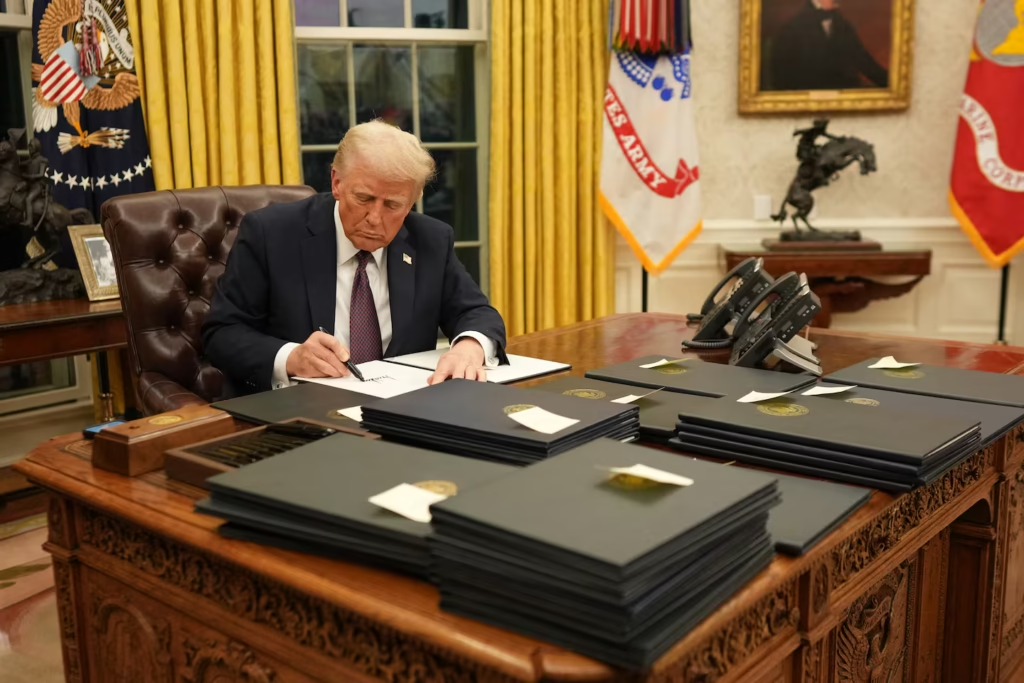
President Trump isn’t mincing words: “We’re deporting them fast—criminals, terrorists, spies. Iran won’t use our borders against us!” His executive orders prioritize migrants from Iran, Lebanon, and proxies, with military escorts for high-threat removals.
Successes? Over 50 Hezbollah suspects deported since March 1. But challenges mount: Legal battles in blue states delay flights, and overwhelmed agents miss red flags. Experts like Heritage Foundation’s Lora Ries predict “if Iranian spy cells US activate, we’ll see more Michigans and Virginias.”
What’s next? Trump pushes for “total vetting overhaul,” including AI scans at borders. But with war escalating—US troops down in a March 11 plane crash—time is short.

Sanctuary Cities: Breeding Grounds for Iranian Infiltration?
Look at Michigan: Dearborn, a Hezbollah stronghold per FBI, resisted ICE cooperation pre-war. Now, post-attack, locals demand change. Similar in Virginia: Norfolk’s immigrant communities harbored Jalloh undetected.
Nationwide, 500+ sanctuary jurisdictions shield potential proxies. Trump vows federal funding cuts, but Iran exploits the chaos. Intel leaks suggest Iranian spy cells in US cities like Los Angeles, Houston, and Chicago—coordinating via encrypted apps for sabotage.
The Bigger Picture: WWIII on Home Turf?
This isn’t isolated. Iran’s Supreme Leader vowed “pain for America everywhere.” With depleted US missiles and oil crises, domestic strikes are low-cost wins for Tehran. FBI Director Wray testified March 13: “Threat level is elevated—Iranian spy cells US are real.”
Florida readers: Check your communities. Inverness may seem safe, but Tampa’s ports are vulnerable to drone attacks like those in the Gulf.
The Rocci Stucci Show dives deep this week with border experts and attack survivors. Subscribe—don’t wait for mainstream spin.
What’s your take? Spot suspicious activity? Drop tips in comments and share if you support Trump’s deportations.
Stay alert, America. Iranian spy cells in the US aren’t coming—they’re here.


