


The chikungunya virus outbreak that has locked down parts of China just took a dangerous turn, with Taiwan’s Centers for Disease Control confirming its first case this week as infections surge past 8,000 across the mainland. Health experts are now sounding alarm bells about a potential global epidemic reminiscent of the COVID-19 pandemic’s early stages
Taiwan’s CDC reported Friday that a Taiwanese woman in her 40s contracted the mosquito-borne virus after traveling from Foshan, the epicenter of China’s massive outbreak in Guangdong Province. The patient returned to Taiwan on July 30, marking the virus’s first confirmed international spread from the Chinese outbreak.
Chikungunya Virus Outbreak Reaches Critical Mass in Foshan
The numbers are staggering. Foshan City alone has registered more than 7,000 chikungunya cases, with authorities reporting 333 newly confirmed cases in a single day on August 1st. This represents the largest chikungunya outbreak ever recorded in a single city, according to virus surveillance experts
The outbreak has now spread beyond Foshan to encompass 12 other cities across Guangdong Province, bringing the total provincial case count to over 8,000 infections. The Shunde district of Foshan reported the first imported case in early July, which health officials believe sparked the massive community transmission
“This outbreak in China is very concerning,” Dr. Louisa Messenger, a mosquito researcher at the University of Nevada, told media outlets. “It could already be here in the US; and really it’s just one plane flight away.”
The US Centers for Disease Control and Prevention (CDC) has issued a Level 2 travel advisory for Guangdong Province, urging Americans to take extra precautions when visiting the region. With an estimated 1.6 million people traveling between the US and China annually, experts warn it only takes one infected traveler to spark local transmission.
Global Chikungunya Cases Spike to Record Levels
The China outbreak is just part of a broader global chikungunya epidemic that has exploded in 2025. According to the European Centre for Disease Prevention and Control, approximately 240,000 chikungunya cases and 90 deaths have been recorded across 16 countries so far this year.
Major outbreaks are simultaneously hitting:
- Indian Ocean islands (La Réunion, Mayotte, Mauritius)
- African nations (Madagascar, Somalia, Kenya)
- Asian countries (India, now spreading to Europe)
- Pacific islands (Samoa, Tonga, French Polynesia, Fiji, Kiribati)
WHO Sounds Alarm Over Chikungunya’s Rapid Global Spread
Dr. Diana Rojas Alvarez, a medical officer with the World Health Organization (WHO) and lead on arboviruses, issued stark warnings about the current outbreak’s trajectory during a Geneva briefing.
“We are seeing history repeating itself,” Dr. Rojas Alvarez warned, referencing the massive 2004-2005 outbreak that infected nearly half a million people across Africa, Asia and the Americas. “Chikungunya fever is not widely recognized, but in regions where populations have little or no immunity, the virus can quickly cause significant epidemics, affecting up to three-quarters of the population”.
The WHO’s Global Arbovirus Initiative has been tracking the unprecedented spread, with Dr. Rojas Alvarez noting that two-thirds of the population of the French island of Réunion was infected during previous outbreaks, demonstrating the virus’s devastating potential.
China Deploys COVID-Era Restrictions Against Chikungunya
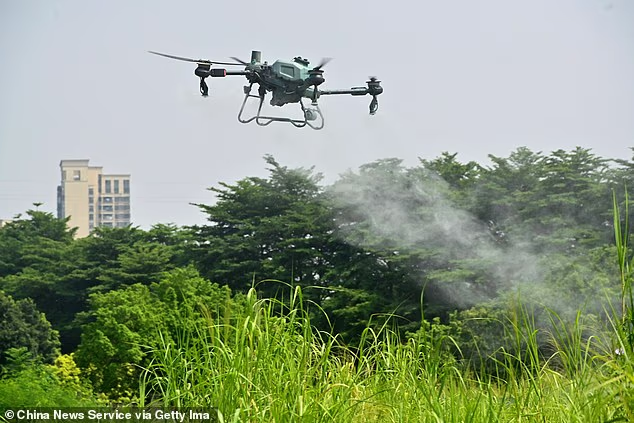
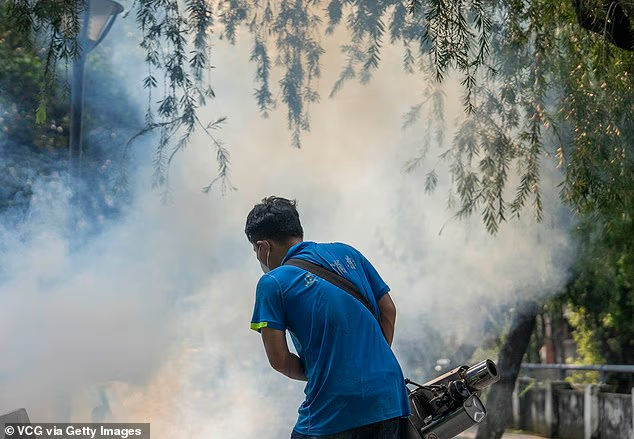
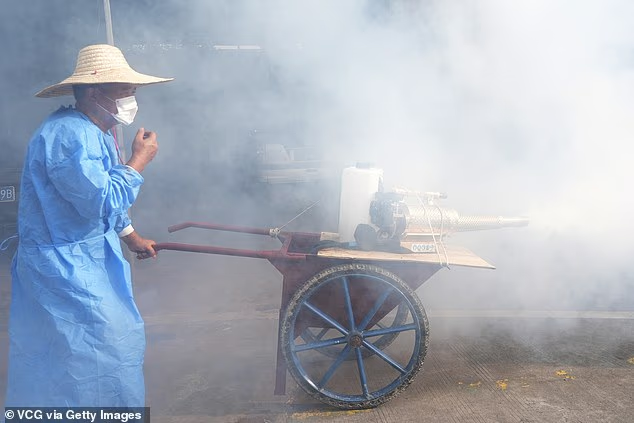
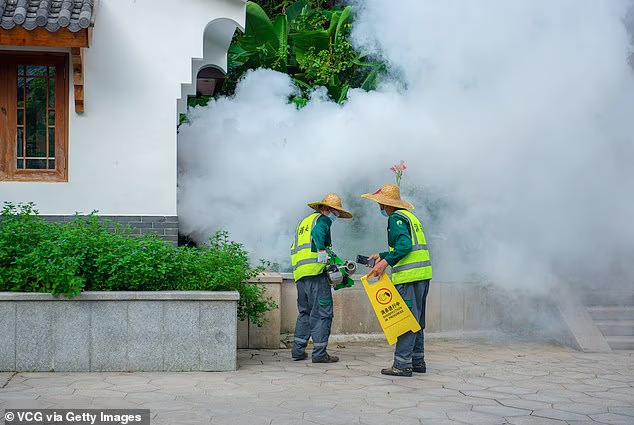
Chinese authorities have launched an aggressive containment strategy that mirrors early COVID-19 responses. State workers are spraying clouds of disinfectant throughout Foshan city streets, residential areas, and construction sites where standing water might harbor virus-carrying mosquitoes.
Current containment measures include:
- Mandatory hospital isolation for infected patients under mosquito nets
- 14-day quarantine requirements (recently withdrawn)
- Drone surveillance to locate mosquito breeding grounds
- Fines up to $1,400 for non-compliance
- Electricity shutoffs for violators
Images from Foshan show hazmat-suited workers systematically spraying entire neighborhoods while drones hunt down insect breeding grounds with targeted insecticide attacks.
Taiwan Raises Travel Alert as Cases Mount
Taiwan’s government has escalated its response following the first confirmed case from mainland China. Kuo Hung-wei, Director of Taiwan’s CDC Epidemic Intelligence Center, reported that all 17 chikungunya cases in Taiwan this year have been imported from abroad, with the highest number originating from Southeast Asian countries.
Taiwan’s Centers for Disease Control has now issued enhanced travel warnings for Guangdong Province and is conducting intensive surveillance for additional imported cases. The agency is coordinating closely with the US CDC and WHO to monitor potential spread patterns.
US Chikungunya Cases Rise as Experts Fear Local Transmission
The United States has recorded 46 chikungunya cases this year through August 5, all contracted by travelers returning from high-risk areas. While no deaths have been reported, the CDC acknowledges it’s unclear how many cases might be linked to China’s outbreak.
The US previously experienced limited local transmission in 2014 and 2015 when cases were detected in Florida and Texas. That outbreak year saw 2,799 total cases – including 12 locally acquired infections – making it America’s worst chikungunya year on record.
Dr. Roger Hewson, virus surveillance lead at the UK’s Wellcome Sanger Institute, emphasized the global threat: “This is the largest chikungunya outbreak ever recorded. The international community must take immediate action to prevent widespread transmission.”
Singapore and Hong Kong on High Alert
Neighboring territories are bracing for potential spread from Guangdong Province. Singapore has reported doubled chikungunya cases in recent weeks, while Hong Kong authorities are implementing enhanced surveillance measures at border crossings with mainland China.
The proximity of Foshan to Hong Kong – just 140 kilometers away – has health officials particularly concerned about cross-border transmission through the millions of travelers who transit between the regions monthly.
How to Protect Yourself from Chikungunya Virus
Health officials emphasize that chikungunya cannot spread person-to-person. The virus only transmits when mosquitoes bite infected individuals and then bite others. However, pregnant women can pass the virus to newborns during delivery, potentially causing severe illness.
Essential protection strategies:
- Use EPA-approved insect repellent containing DEET
- Wear long-sleeved clothing and pants, especially during dawn and dusk
- Stay in air-conditioned or screened accommodations
- Eliminate standing water around homes (flower pots, containers)
- Seek immediate medical attention for fever, joint pain, or rashes after travel
Travel Warnings Expand Beyond China
The CDC has now issued elevated risk notices for 10 countries: Brazil, Colombia, India, Mexico, Nigeria, Pakistan, the Philippines, Thailand, Bolivia, Sri Lanka, and China. Americans are urged to ensure proper vaccination if at increased exposure risk.
No Vaccine, No Cure: Management Focus on Prevention
Currently, no antiviral treatment exists for chikungunya. Medical management focuses on symptom relief through rest, hydration, and pain medications like acetaminophen. This makes prevention the primary defense against what experts fear could become the next global health emergency.
The virus has now been detected in more than 100 countries historically, with infections most common in Asia, Africa, and South America. Recent cases are increasingly emerging across Europe and North America as global travel patterns facilitate rapid international spread.
“The acute phase of illness typically resolves within one to two weeks, but joint pain may linger for weeks, months or even years in some cases,” health officials warn. Newborns, seniors over 65, and people with underlying health conditions face higher risks of serious complications, including cardiovascular problems and potentially Type 2 diabetes triggered by post-viral inflammation.
The Bottom Line on Chikungunya’s Global Threat
With over 8,000 cases in China alone and 240,000 infections worldwide in just eight months, the 2025 chikungunya outbreak represents a clear and present danger to global health security. Taiwan’s first confirmed case from the Chinese outbreak signals that international spread is no longer a possibility – it’s already happening.
As one infected traveler demonstrated, modern aviation makes every major population center just hours away from the next potential outbreak epicenter. Health authorities worldwide are watching nervously as this chikungunya epidemic follows disturbingly familiar patterns that preceded other global health emergencies.
The World Health Organization, US CDC, and health agencies across Asia, Europe, and the Americas are coordinating unprecedented surveillance efforts to prevent the next pandemic-level outbreak from catching the world unprepared.
SHOCKING: Scientists Destroy 50-Year Egg Myth That’s Been Ruining Your Breakfast
Frequently Asked Questions About Chikungunya Virus
Q: What is chikungunya virus and how does it spread?
A: Chikungunya is a mosquito-borne viral disease spread primarily by Aedes aegypti and Aedes albopictus mosquitoes. It cannot transmit person-to-person, only through mosquito bites.
Q: What are the main symptoms of chikungunya infection?
A: Primary symptoms include sudden onset of high fever, severe joint pain, muscle aches, headaches, and skin rashes. Joint pain can persist for months or years.
Q: Is there a vaccine or treatment for chikungunya virus?
A: No specific antiviral treatment or vaccine exists. Management focuses on symptom relief with rest, fluids, and pain medications like acetaminophen.
Q: How can travelers protect themselves from chikungunya?
A: Use insect repellent, wear protective clothing, stay in screened accommodations, and eliminate standing water sources around your location.
Q: What makes the current chikungunya outbreak so concerning?
A: This is the largest outbreak ever recorded, with over 240,000 cases globally and confirmed international spread from China to Taiwan, threatening global health security.
Ready to stay informed about breaking health news and global threats? Subscribe to Stucci Media for expert analysis and real-time updates on the stories that matter most.
Copyright © Stucci Media 2025 | All Rights Reserved


