



When a British tourist recently refused to accept his assigned seat on a Thai Lion Air flight, the situation escalated to the point of police intervention. This incident highlights the increasing tension between passenger comfort expectations and Airline Policies – an issue that affects millions of travelers annually.
The Bangkok Incident: What Really Happened
On a recent Thai Lion Air flight departing from Bangkok, what should have been a routine boarding process turned into a spectacle that delayed takeoff by nearly an hour. A male passenger, reportedly unhappy with the lack of space in his assigned window seat, requested to be moved to an emergency exit row for its additional legroom.
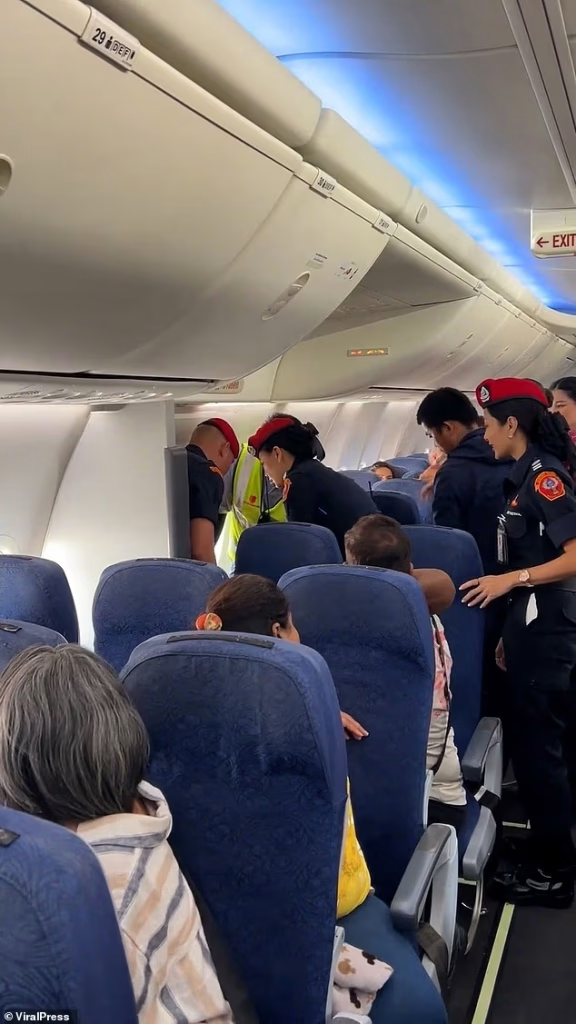
When flight attendants denied this request (as these seats typically come with extra fees and responsibilities), the passenger allegedly caused a disturbance that prompted airline staff to call airport police. Video footage shows officers physically removing the uncooperative man from the aircraft as he lay down in the aisle in protest.
Fellow travelers expressed frustration at the delay, with one British woman heard calling the man “selfish” as officers dragged him along the floor of the aircraft.
“At first, I thought we couldn’t take off because the man had fallen ill. It turned out he just thought the economy seat was too crowded and insisted on moving to the emergency exit,” said one witness who recorded the incident.
Airline Seating Policies: What Every Passenger Should Know
This incident raises important questions about airline seating policies and passenger rights. Here’s what travelers need to understand:
- Emergency exit row seats are not simply “upgrade options” – they come with responsibilities for passenger safety and often require additional payment
- Seat assignments are contractual – when you purchase a ticket and accept a seat assignment, you’re entering an agreement with the airline
- Airline authority is extensive – carriers have broad powers to remove passengers who create disturbances or refuse to comply with crew instructions
- Size accommodation policies vary widely between airlines – some require larger passengers to purchase additional seats while others have more flexible approaches
Airlines establish these policies to balance business interests with passenger comfort and safety concerns. When disputes arise, flight crews have little choice but to enforce the rules as written.
The Growing Debate Over Airline Space Allocation
The Bangkok incident occurs against the backdrop of an evolving conversation about how airlines should accommodate passengers of different sizes. The debate centers around several key questions:
Should Airlines Implement Weight-Based Pricing?
Some carriers have explored weight-based pricing models. In 2013, Samoa Air introduced what critics called a “fat tax,” though the policy failed to gain widespread adoption. More recently, Finnair conducted a three-month voluntary data collection program gathering passenger weight information to refine aircraft balance calculations.
A survey of American adults revealed divided opinions on three potential pricing models:
- The current system (standard fare with luggage limits)
- A “weight threshold” model (extra charges for passengers over 160 pounds)
- A “body weight” model (pricing based on individual weight)
Not surprisingly, preferences aligned with self-interest – lighter passengers preferred weight-based pricing, while heavier travelers favored the status quo.
The Push for More Inclusive Policies
On the opposite end of the spectrum, advocates like Jaelynn Chaney have campaigned for more accommodating policies for larger passengers, including free additional seating. Critics counter that passengers pay for excess baggage weight, so the same logic should apply to body weight.
Chaney rejects this comparison: “Charging by weight is fat-phobic and dehumanizing. I’m not a suitcase. The focus should be on fixing the system, not the people.”

What Can Passengers Do to Avoid Seating Conflicts?
For travelers concerned about comfort during flights, especially those who may need extra space, planning ahead is essential:
- Research airline policies before booking – some are more accommodating than others
- Consider premium economy or similar options that offer additional space at a lower cost than business class
- Contact the airline directly before your flight to discuss accommodation needs
- Book during off-peak times when flights may be less crowded
- Arrive early for better chances of resolving seating issues before boarding
Similar Incidents Show This Isn’t an Isolated Problem
The Bangkok incident isn’t unique. Just days earlier, another disruptive episode occurred on a Southwest Airlines flight at LaGuardia Airport when an intoxicated 32-year-old woman had what witnesses described as a “meltdown” after being seated next to a larger passenger. The situation turned physical, with the woman pulling another passenger’s hair, spitting, and kicking.
These incidents point to a broader issue: as airlines squeeze more seats into aircraft and the average passenger size increases, conflicts over space will likely continue without policy changes.
How Airlines Are Responding to Changing Passenger Needs
Some progressive carriers have begun adjusting their approaches:
- Southwest Airlines allows passengers of size to request an extra seat at no additional cost
- Air Canada has introduced a “one person, one fare” policy for those requiring extra space due to disability
- Delta Airlines has slightly wider seats in their newer aircraft
- JetBlue offers the most legroom in economy among domestic carriers
However, most airlines still operate with decades-old seating standards that don’t reflect today’s reality.
The Economic Reality of Air Travel
While passenger comfort is important, airlines face tight economic constraints. With fuel representing 20-30% of operating costs, every pound matters. This creates a challenging balancing act between:
- Keeping ticket prices affordable
- Maintaining profitability
- Ensuring passenger comfort
- Accommodating diverse body types

Expert Perspectives: Finding Middle Ground
Travel industry analysts suggest several potential paths forward:
“Airlines could adopt more transparent pricing models where base fares include minimum comfortable dimensions, with clear options for additional space,” says aviation consultant James Richardson. “This would give passengers more agency in their travel decisions while maintaining airline profitability.”
Others propose technological solutions, such as more adaptable seating configurations that can be adjusted based on flight requirements and passenger needs.
Frequently Asked Questions
Can airlines legally remove passengers who don’t fit in a single seat?
Yes. Airlines have the legal right to remove passengers who cannot safely and comfortably sit in a single seat with the seatbelt fastened, especially if they refuse to purchase an additional seat when required by policy. The contract of carriage, which passengers agree to when purchasing tickets, typically covers these situations.
What are my rights if I need extra space on a flight?
Your rights vary by airline and country. In the US, while the Air Carrier Access Act prohibits discrimination against people with disabilities, obesity itself is not automatically considered a disability. Your best approach is to contact the airline at least 48 hours before your flight to discuss accommodations and understand their specific policies.
How can I find out an airline’s policy on passengers of size before booking?
Most airlines publish their “passengers of size” policies on their websites under travel information or special assistance sections. If you can’t find this information easily, call the airline’s customer service directly and ask for their written policy.
Looking Forward: The Need for Industry-Wide Standards
As air travel continues to grow globally and passenger demographics evolve, the industry needs clear, consistent standards for seating accommodations that respect human dignity while acknowledging business realities.
Until then, being informed about airline policies and planning ahead remains the best strategy for travelers concerned about comfort and space during flights.
Whether you’re a frequent flyer or occasional traveler, understanding your rights and responsibilities can help you navigate the increasingly complex world of air travel with minimal stress and maximum comfort.
Subscribe to Stucci Media for more in-depth coverage of travel policies, consumer rights, and practical guidance for navigating today’s challenging travel landscape.


